15-Minute Garlic Shrimp Over Greens
Frozen shrimp from the bag, garlic, lemon, a handful of arugula. Dinner before the kettle finishes boiling.
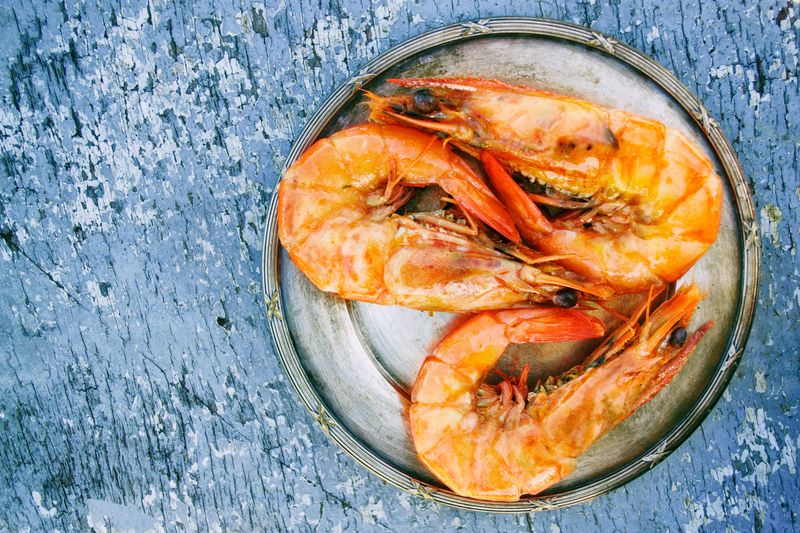
Why this works for founders
Shrimp are high in selenium, iodine, and zinc — three minerals whose deficiencies are common in stressed adults and which all affect cognitive function. Frozen shrimp are functionally identical to fresh for cooking purposes (most "fresh" shrimp at the counter were previously frozen anyway). Keep a bag in the freezer for nights when cooking is non-negotiable but you have nothing.
Ingredients (1 serving)
- 200g raw shrimp, peeled and deveined (thawed if frozen)
- 3 cloves garlic, minced
- 2 tbsp olive oil
- 1 tsp butter
- ½ tsp chilli flakes
- 1 cup arugula or baby spinach
- ½ lemon
- Salt, pepper
- Optional: a slice of toasted bread to mop up the pan juices
Steps
- Thaw shrimp under cold running water if frozen — takes 5 minutes.
- Pat dry. Salt and pepper.
- Heat oil in a pan over medium-high. Add shrimp in one layer. 1.5 min per side until pink.
- Drop heat. Add butter, garlic, chilli flakes. 30 seconds.
- Toss in the greens with the shrimp. Squeeze lemon over.
- Plate. Serve immediately.
Macros per serving (approx)
- Calories: 380
- Protein: 36g
- Fat: 22g
- Carbs: 8g
Founder note
If you only own one pan, make it a 25cm stainless steel or carbon steel. Shrimp needs aggressive heat and a non-stick pan can't deliver it.
The deeper logic
Shrimp are unusually high in selenium (40 mcg per 100 g, roughly
70 percent of the daily value) and iodine. Selenium is the cofactor
for glutathione peroxidase, one of the body's central antioxidant
enzymes. Iodine is the substrate for thyroid hormones; mild iodine
deficiency is more common than the dietary surveys imply and
correlates with measurable cognitive slowing.
Zinc in shrimp is also meaningful at roughly 1.5 mg per 100 g —
which puts a 200 g serving at about 25 percent of the daily value.
Zinc deficiency is associated with anosmia (loss of smell), poor
immune function, and slower wound healing. The trace-mineral mix
in shellfish broadly is one of the strongest arguments for keeping
some seafood in the weekly rotation.
The fast-cook argument is structural. Shrimp cook in 90 to 120
seconds per side at high heat. The meal is engineered to be
ready before a delivery app could deliver an equivalent — and at
a fraction of the cost.
Frozen vs fresh
The "fresh" shrimp at the supermarket counter has almost always
been previously frozen, thawed for display, and is being sold at a
markup over the frozen bag in the same store. The bag is the
better purchase: same shrimp, lower price, longer kitchen life,
and you control the thaw timing.
The thaw method matters. Cold-water thaw under running cold water
in a colander takes 5 to 8 minutes for a standard portion. Room-
temperature thaw on the counter is faster but pushes the shrimp
through the temperature danger zone (5 to 60 C) where pathogen
growth accelerates. Refrigerator thaw overnight is the safest but
requires planning.
Why this is a single-pan dinner
The pan: one 25 to 30 cm carbon-steel or cast-iron skillet. The
heat: medium-high until the oil shimmers. The order: oil, then
shrimp in a single layer, then 90 seconds, flip, 60 seconds, then
add the garlic and chili and butter, then the greens. The total
elapsed is under 8 minutes from pan-to-plate.
The dish scales linearly for two people; for four people, use two
pans (the single-layer requirement matters — overlapping shrimp
steam rather than sear).
Substitutions
- No shrimp: scallops (similar cook time, slightly higher
cost), squid rings (similar cook time, lower cost, more
forgiving), or firm white fish in cubes (cod, halibut). Pre-
cooked frozen shrimp also works in a pinch but the flavor is
significantly muted. - No arugula: baby spinach, watercress, mixed baby greens. The
pepperiness of arugula or watercress balances the rich
garlic-butter; baby spinach is milder and you may want extra
lemon to compensate. - No lemon: lime works; orange does not (too sweet). A
tablespoon of white wine in the deglaze is a luxury option.
Storage detail
Shrimp do not store well once cooked. The texture turns rubbery
within hours of refrigeration and refrigeration smell intensifies.
This is a make-it-and-eat-it dish.
If you must have leftovers, eat them cold within 24 hours over a
salad. Do not reheat shrimp in the microwave — the texture is
worse and the smell is significant.
Common mistakes
- Cooking from frozen. The shrimp release water into the pan, the
pan temperature drops, and the dish steams rather than sears.
Thaw fully; pat dry; salt; then cook. - Browning the garlic. The garlic goes in after the shrimp are
done, on residual heat — 30 to 45 seconds. Garlic browned in
hot oil turns bitter and dominates the dish. - Using butter alone as the cooking fat. Butter smokes at 175 C;
shrimp need 200+ C to sear. Use olive oil for the shrimp; add
butter at the end for the finishing flavor.
The dish is the founder fallback dinner — frozen bag, garlic,
lemon, greens. Twelve dollars of shrimp lasts a week of dinners
when paired with different greens and grain bases. The single-pan
constraint keeps the kitchen footprint minimal.