Marion Nestle's Food Politics — Read This Before Your Next Grocery Run
Marion Nestle's Food Politics (2002, updated 2013) is the standing reference on how the American food industry shapes dietary advice, school lunches, and the supermarket aisle.
Who Nestle is
Marion Nestle is professor emerita of nutrition, food studies, and public health at NYU. Food Politics: How the Food Industry Influences Nutrition and Health (UC Press, 2002, revised 2013) is the book of her career. She has written half a dozen others — What to Eat (2006), Soda Politics (2015), Unsavory Truth (2018), Slow Cooked (2022) — and runs a newsletter called Food Politics that's worth subscribing to.
What the book argues
The American food industry — meat, dairy, sugar, beverages, packaged food — spends enormous resources to shape what the public is told about nutrition. The mechanisms include:
- Direct lobbying of USDA and FDA. The food pyramid (and now MyPlate) is a political document as much as a nutritional one. Meat and dairy industry pressure has consistently softened recommendations to eat less of those categories.
- Funded research. Studies sponsored by food industries reliably produce results favorable to those industries; this is documented in dozens of peer-reviewed analyses.
- School lunch programs. Industry has lobbied to keep pizza counted as a vegetable (via tomato paste), to push subsidized commodity products into school cafeterias.
- Front-of-pack labels. Most "healthy" labels are not regulated definitions; they're marketing terms.
The book is patient and detailed. It is not a polemic. Nestle is a careful empiricist; she names the studies and the lobbyists.
What changes
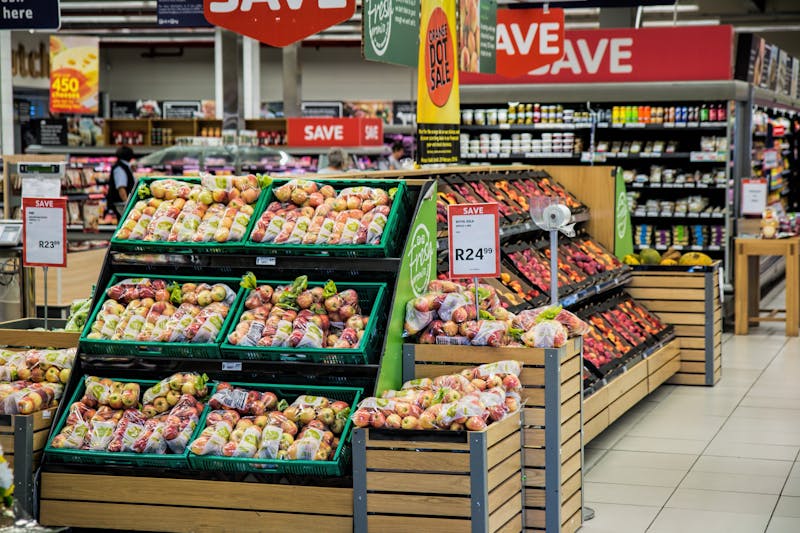
You read the supermarket differently. Health claims on packaging become noise. The "fat-free" yogurt is mostly sugar; the "whole grain" cereal is mostly refined grain with bran added back; the "natural" anything is a word with no regulatory meaning.
You also start reading the back label, not the front. Ingredients in descending order by weight. If sugar is in the first five ingredients of a food that isn't supposed to be sweet (bread, salad dressing, pasta sauce), you have a problem with the product.
Where to start
What to Eat (2006) is the gentler entry point — Nestle walks the reader through a supermarket aisle by aisle. Food Politics is the heavier reference. Read What to Eat first if you've never read anything in this space.
Newsletter
foodpolitics.com — free, weekly, dense, useful.
Who Nestle is
Marion Nestle is professor emerita of nutrition, food studies, and
public health at New York University. Her academic and writing
career spans roughly five decades and focuses on the political
economy of the American food supply — specifically, how food
corporations shape what counts as nutritional advice, what gets
into school cafeterias, and how dietary guidelines get written.
The first edition of Food Politics came out in 2002. The 2013
revised edition includes a decade of follow-up data. Her newsletter
Food Politics continues to publish regularly.
The central argument
The argument: nutrition science is not neutral. The dietary
guidelines that shape what Americans eat are written by committees
whose membership includes representatives of food-industry trade
groups. The food pyramid (and its successors) reflects industrial
lobbying as much as it reflects nutritional consensus.
The mechanism Nestle traces in detail: industry-funded studies tend
to find results favorable to their funders; trade groups place
representatives on USDA committees; nutritional language gets
softened or specified in ways that protect industrial products from
direct dietary criticism.
What has shifted since 2002
The book's argument has been adopted into mainstream nutrition
discourse. The 2010s and 2020s have seen significantly more
willingness to talk about ultra-processed foods, sugar consumption,
and the industrial-nutritional complex. Nestle's framing is now
broadly accepted in academic nutrition circles even where it was
controversial in 2002.
What has not shifted: the lobbying mechanisms continue to operate.
Subsequent revisions of the dietary guidelines have continued to
soften language around sugar, sodium, and red meat in ways that
align with industry preferences.
The complementary reading
Food Politics sits alongside three other major contemporary food-
politics texts that any literate food reader should know:
- Michael Pollan, In Defense of Food (2008) — the
consumer-facing argument for eating real food. - Bee Wilson, The Way We Eat Now (2019) — the global
nutritional transition. - Raj Patel, Stuffed and Starved (2007) — the global food-
industry political economy.
Together these four books cover roughly the entire contemporary
food-politics frame.
What to do with the argument
The grocery-aisle takeaway: read the ingredient lists; assume
that nutritional claims on packaged food are marketing rather than
science; default to whole-food ingredients you cook yourself.
The wider takeaway: nutritional advice that aligns suspiciously
well with selling more of a product is suspect. The advice that
holds up — eat real food, mostly plants, in moderate quantities,
with adequate protein — has been stable for decades and resists
the lobbying flux.
Further reading
- Marion Nestle, Soda Politics (2015) and Unsavory Truth (2018).
- Marion Nestle's Food Politics blog.
- Michael Pollan's broader bibliography.
- Bee Wilson, The Way We Eat Now (2019).