Pacific Northwest Indigenous Foodways — Salmon, Camas, Acorn
The Coast Salish, Chinookan, and Sahaptin peoples of the Pacific Northwest built one of the most abundant food economies on the continent. The system was working when settlers arrived.
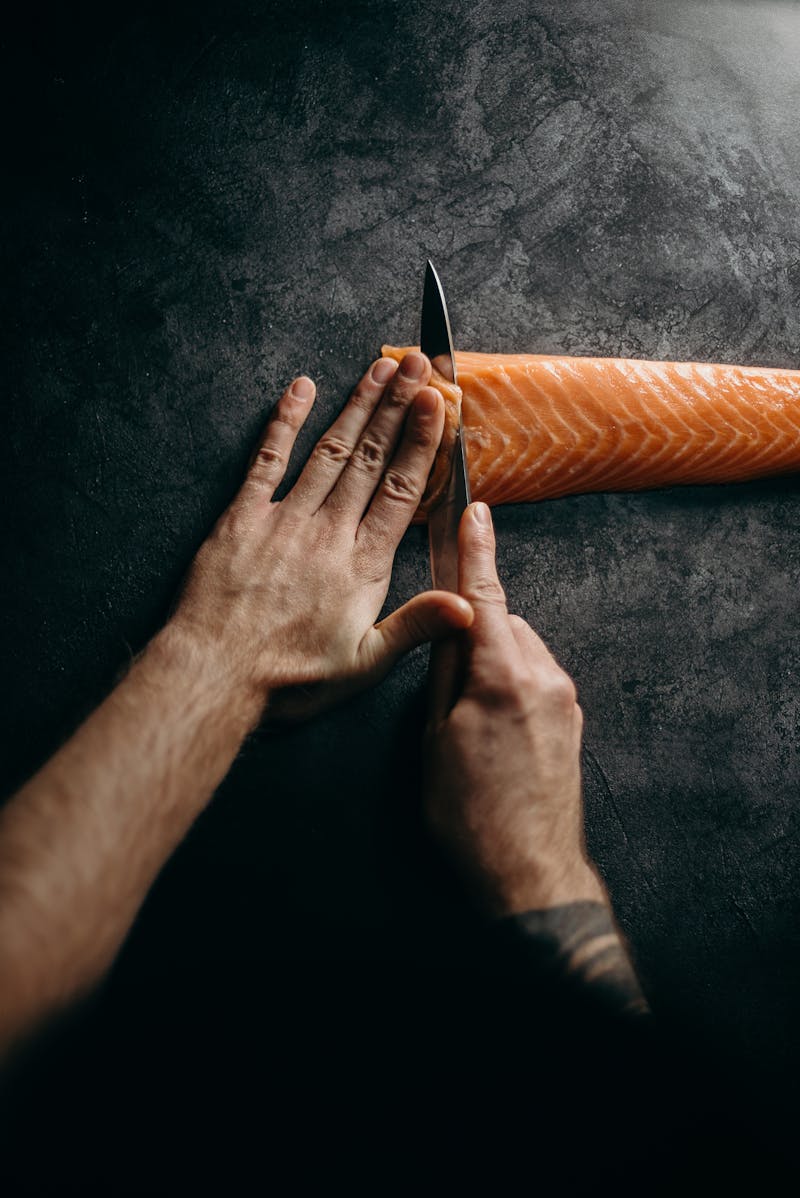
The pre-contact food system
The Pacific Northwest coast — from Northern California through British Columbia — supported some of the densest pre-contact populations on the continent without agriculture in the European sense. The food economy ran on:
- Salmon. Five Pacific species: chinook, coho, sockeye, pink, chum. Annual runs harvested at known sites — Celilo Falls on the Columbia, Kettle Falls, the Fraser River. Smoked or wind-dried for year-round storage.
- Camas. A blue-flowered lily whose bulb was pit-cooked into a caramelized, sweet, calorie-dense food. Camas prairies were actively managed (cleared with controlled burns).
- Acorn. Tan oak and white oak acorns, leached of tannins and processed into flour by California tribes (Pomo, Maidu, Wintun) and the Klamath.
- Shellfish. Clams, mussels, oysters, geoducks. Coastal shell middens are tens of meters deep in some sites — evidence of millennia of harvest.
- Berries. Salmonberry, thimbleberry, huckleberry, salal, Oregon grape. Dried into cakes.
- Wapato (arrowhead). Tuber harvested from shallow lakes by Chinookan women.
- Eulachon (oolichan). A small fish so oil-rich it was rendered into the "grease trail" trade good that moved hundreds of kilometers inland.
What happened
European contact, smallpox (1770s onward), the suppression of controlled burning, the construction of dams (Bonneville 1937, Grand Coulee 1941) blocking salmon migration, the conversion of camas prairies to wheat farms. The food system was substantially destroyed within 150 years.
Celilo Falls, the largest salmon fishing site in pre-contact North America, was inundated by the Dalles Dam in 1957. Tribes had fished there for at least 11,000 years.
The recovery
In the last two decades, multiple Pacific Northwest tribes have done substantial work to recover traditional foodways:
- Coast Salish, Lummi, Quinault, Makah, Suquamish — salmon restoration, traditional fishing rights, cedar-smoked salmon revival.
- Confederated Tribes of the Umatilla, Yakama, Warm Springs, Nez Perce — Columbia River salmon co-management, camas prairie restoration.
- Pomo, Karuk, Yurok — California acorn-processing revival.
The work is slow and underfunded. It's also among the most important food-sovereignty work happening in the country.
What to read and watch
- Robin Wall Kimmerer, Braiding Sweetgrass (2013). Not specifically PNW, but the philosophical framework.
- Sean Sherman, The Sioux Chef's Indigenous Kitchen (2017) — different region but the same broader project.
- The Salmon People (documentaries; recurring topic in PBS coverage).
- Nez Perce, Yakama, and Warm Springs tribal websites — they publish on their own food sovereignty work.
What you can do
- Eat wild Pacific salmon when you can; support fisheries that pay tribes for harvest rights.
- Avoid Atlantic farmed salmon if the supply chain matters to you. It nearly always farms in pens that compete with Pacific wild fish.
- Look up Sean Sherman's NATIFS organization (North American Traditional Indigenous Food Systems). They consult with multiple PNW tribes.
The salmon foundation
The Indigenous Pacific Northwest cultures — Coast Salish, Chinook,
Tlingit, Haida, Makah, Quinault, Yurok, and many others — built
their foodways around salmon. The five Pacific salmon species
(Chinook, coho, sockeye, pink, chum) ran in the rivers from
California to Alaska in densities that supported some of the
densest non-agricultural populations in North America.
The salmon was caught in weirs, traps, and dip-nets; preserved by
smoking, drying, and fermentation; redistributed through gift-
exchange networks (the potlatch tradition) across coastal
communities.
The contemporary salmon collapse — driven by dams, habitat
destruction, hatchery genetics, and ocean warming — is one of the
clearest cases of an Indigenous foodway being attacked through
environmental policy. The salmon recovery work remains an active
political project.
The camas and acorn complex
Beyond salmon, the Pacific Northwest food complex included:
-
Camas bulb (Camassia quamash). A blue-flowered lily whose
bulb was traditionally pit-roasted for two to three days,
converting the indigestible inulin to digestible sugars. The
result is a sweet, chestnut-like tuber that was a staple
carbohydrate across much of the inland Northwest. -
Acorns, primarily from California oak species but also
Garry oak in southern British Columbia and Washington. Acorns
were leached of their tannins (a multi-day process), then
ground into flour for breads and porridges. -
Eulachon (smelt), the small fatty fish that ran in spring
and was rendered into grease — a major trade good across the
region. -
Berries (huckleberry, salal, salmonberry, thimbleberry,
oregon grape) preserved by drying. -
Bitter root (Lewisia rediviva), a starch staple on the
inland Plateau. -
Various seaweeds and shellfish along the coast.
The contemporary revival
Sean Sherman's work (Oglala Lakota chef, founder of NATIFS and
Owamni in Minneapolis) has brought significant attention to
Indigenous foodways across North America. Pacific Northwest-
specific chefs include Loretta Barrett Oden (Citizen Potawatomi
Nation) and Crystal Wahpepah (Kickapoo).
The revival is also a sovereignty movement. The salmon recovery
work is driven primarily by tribal governments. The camas and
acorn revival is happening on tribal land in partnership with
ecological-restoration organizations.
Further reading
- Sean Sherman, The Sioux Chef's Indigenous Kitchen (2017).
- Nancy J. Turner, Plants of Haida Gwaii (2004) and other
ethnobotanical works. - Daniel Wildcat & Vine Deloria, Power and Place (2001).
- Robin Wall Kimmerer, Braiding Sweetgrass (2013).