The Columbian Exchange — How Tomatoes Became Italian
The tomato is from the Andes. Pasta marinara is from a 16th-century cargo. Most foods you think of as ancestral are actually 500-year-old immigrants.
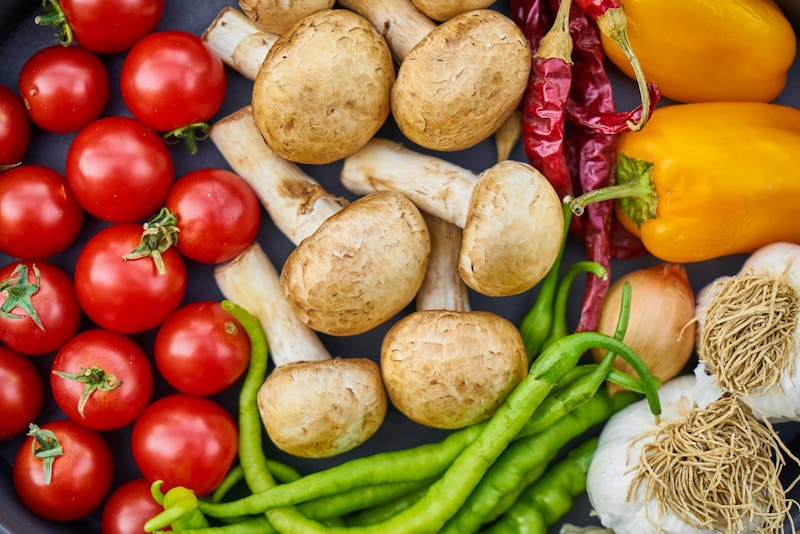
The trade
The Columbian Exchange — the term comes from historian Alfred Crosby's 1972 book — is the post-1492 movement of plants, animals, and pathogens between the Americas and Eurasia. Foods we now think of as ancestral to specific cuisines almost all arrived in their adoptive home after 1500.
The crops that moved out of the Americas
- Tomato — Andean origin. Reached Italy via Spain in the 16th century; not common in Italian cooking until the 18th, not standard until the 19th. Italian pasta-with-tomato is younger than the United States.
- Potato — Andean origin. The Irish potato is from Peru. Reached Ireland in the late 16th century. Became the dietary backbone of northern Europe by 1750.
- Maize (corn) — Mesoamerican origin. Became staple flour in northern Italy (polenta), Romania (mamaliga), and parts of West Africa within 200 years.
- Chili peppers — Mesoamerican and Andean origins. Reshaped the cuisines of India, Thailand, Sichuan, Korea, Hungary, West Africa within two centuries.
- Cocoa — Mesoamerican. The Aztec drink became European chocolate.
- Vanilla — Mesoamerican.
- Cassava (yuca) — Amazonian. Became a calorie staple across much of West and Central Africa.
- Peanut — South American. Same.
- Sweet potato — South American. Reached the Philippines, then East Asia.
What moved into the Americas
- Wheat, barley, rice (from Asia), oats, rye — none native.
- Cattle, pigs, sheep, chickens, horses — none native.
- Sugarcane — South Asian / Southeast Asian; brought to the Caribbean by Columbus on his second voyage; became the engine of slavery in the New World.
- Coffee — Ethiopian, via Yemen, via the Ottoman empire, via Europe, to Brazil.
- Banana — Southeast Asian, via Arab traders to Africa, then across.
The implication
If you cook "traditional" food, the tradition is rarely older than the Columbian Exchange. This is not an argument against tradition; it's a calibration. The dishes are real. Their ancientness is mostly invented.
The cost
The Columbian Exchange was not a neutral trade. The pathogens moving into the Americas — smallpox, measles, influenza — killed an estimated 90% of the Indigenous population over 150 years. The labor system that processed sugar, coffee, and tobacco for the European market was the Atlantic slave trade. The cookbook history and the human-cost history are inseparable.
Reading
- Alfred Crosby, The Columbian Exchange (1972). The founding text.
- Charles C. Mann, 1493 (2011). Modern, very readable.
- Sidney Mintz, Sweetness and Power (1985). Sugar, slavery, and the industrial diet, in one book.
The pre-Columbian Americas
The tomato (Solanum lycopersicum) was domesticated in the highlands
of Mesoamerica, most likely Peru and Ecuador, roughly 5,000 years
ago. The Aztec and Maya cultures cultivated several varieties and
incorporated them into stews, sauces, and salsas. The plant was
unknown in Eurasia before 1492.
The Columbian Exchange — the post-1492 movement of plants, animals,
and diseases between the Americas and Eurasia/Africa — brought the
tomato to Europe via Spanish trade. Botanists in Italy and Spain
recorded the plant from the mid-16th century onward.
The Italian adoption
Italy did not adopt the tomato into cuisine for nearly two
centuries. The plant was treated as an ornamental, suspected of
toxicity (the leaves and stems are mildly toxic; the fruit was
incorrectly assumed to share that property). The first documented
Italian tomato sauce recipe appears in Antonio Latini's 1692
Lo Scalco alla Moderna — a "salsa di pomodoro alla spagnuola"
that Latini explicitly credits to Spanish influence.
The tomato-pasta combination that defines Italian cuisine
internationally is even later. Pellegrino Artusi's 1891 La Scienza
in Cucina — the cookbook that codified modern Italian home cooking
— includes tomato sauces but treats them as one option among many.
The hegemony of tomato sauce in Italian-American cuisine emerges in
the late 19th and early 20th century, partly through the
migration of southern Italians to America and partly through
20th-century Italian regional consolidation.
What this means for the cuisine label
"Italian food" as a fixed category is roughly 130 years old. The
ingredients that define it — tomato, chili, corn, potato — are all
post-Columbian arrivals. The cuisine was a different cuisine in
1450, in 1700, and is a different cuisine again in 1900.
The point is not that Italian cuisine is inauthentic. The point is
that all cuisines are historically contingent. "Authenticity"
arguments that assume a fixed ancestral cuisine misunderstand how
cuisines actually develop.
The trail of other Columbian ingredients
- Chili pepper. Domesticated in the Americas; spread through
the Portuguese trade to India, China, Korea, Thailand within 50
years. Indian cuisine before 1492 had no chili. - Potato. Andean origin; reached Ireland in the late 16th
century; became Irish staple by 1700. - Corn. Indigenous Americas; spread to Italy, Romania, parts of
Africa, where it became polenta, mămăligă, ugali. - Tobacco, vanilla, cacao, peanuts. All Indigenous American
domestications that became global within a few generations.
Further reading
- Alfred Crosby, The Columbian Exchange (1972).
- Charles Mann, 1493: Uncovering the New World Columbus Created
(2011). - Massimo Montanari, Italian Identity in the Kitchen (2013).
- Rachel Laudan, Cuisine and Empire (2013).