The Corn Trail — From Teosinte to Corn Syrup
Maize was domesticated from a Mexican grass called teosinte 9,000 years ago. The journey to high-fructose corn syrup is the central story of American industrial food.
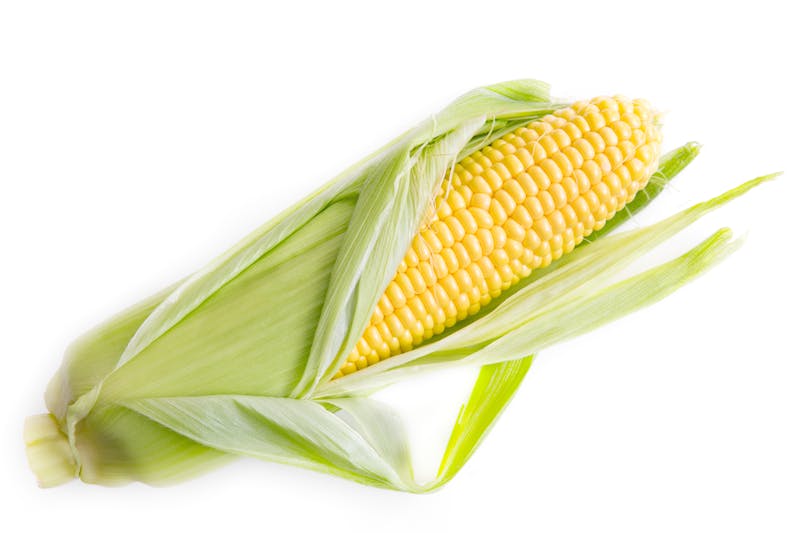
The origin
Maize (Zea mays) was domesticated from teosinte, a wild grass, in the Balsas River valley of southwestern Mexico, about 9,000 years ago. Teosinte has perhaps a dozen kernels in a small ear. Several thousand years of selection by Mesoamerican farmers produced the large-eared maize that spread across the Americas and, after 1492, across the world.
Nixtamalization
Mesoamerican cultures developed nixtamalization — soaking maize in an alkaline solution (traditionally limewater) — independent of the rest of the world. The process makes niacin in the maize bioavailable. Cultures that adopted maize as a staple without nixtamalization (much of Europe, parts of Africa, the American South) developed pellagra — a niacin-deficiency disease — at scale until 20th-century enrichment laws.
The lesson is older than nutrition science. The Indigenous Mesoamerican processing was already correct. Industrial adopters cut the step and people died.
The American maize complex
Maize is the centerpiece of American agriculture:
- Roughly 90 million acres planted annually — the largest US crop by acreage.
- 40% goes to ethanol production.
- 35% goes to livestock feed.
- Around 10% becomes high-fructose corn syrup, corn starch, corn oil, and other industrial ingredients.
- Less than 5% is eaten directly by humans as food.
The 1970s Earl Butz USDA — "plant fencerow to fencerow" — locked in this structure with subsidies favoring high-volume corn-and-soy commodity production.
High-fructose corn syrup
HFCS was commercialized in the 1970s as a cheaper sweetener than sugar (which was supply-constrained for political reasons related to Cuba). It became ubiquitous in US processed food between 1975 and 1995. Per-capita US sweetener consumption rose roughly 25% over the same period, mostly from HFCS replacing sucrose.
The metabolic difference between HFCS and table sugar is real but small; the bigger story is the total dose. Industrial sweetener became cheap, so it was added to everything — bread, salad dressing, pasta sauce, yogurt. The aggregate dose is the public health story.
What to do
Read the back label. If high-fructose corn syrup is in the first five ingredients of something that doesn't taste sweet, you're looking at an industrial product, not food. Most of those products are reformulating, slowly; sucrose, agave syrup, "fruit juice concentrate" — the alternatives are metabolically similar.
The realistic move is to cook real food and reserve sweeteners for things you actually want to taste sweet.
Related reading
- Michael Pollan, The Omnivore's Dilemma, the corn chapter.
- Tom Standage, An Edible History of Humanity (2009), maize section.
- King Corn (documentary, 2007) — short, accessible.
The teosinte origin
Maize (Zea mays) was domesticated from teosinte, a wild grass in
the Balsas River valley of southern Mexico, roughly 9,000 years
ago. The transformation from teosinte to maize is one of the more
dramatic domestications in plant history — the modern corn cob is
visibly different from its wild ancestor in size, kernel
attachment, and seed dispersal mechanism.
The corn complex spread northward through the Americas over
several millennia, reaching what is now the US Southwest by 4000
BCE and the eastern woodlands by 1000 CE. It arrived in Europe
through the Columbian Exchange after 1492 and from there spread
globally.
Nixtamalization
The Mesoamerican technique of treating corn with an alkaline
solution (traditionally limestone water; modern: calcium
hydroxide) before grinding is called nixtamalization. The process
releases bound niacin in the corn, transforms the protein
structure, and produces masa — the dough that becomes tortillas,
tamales, and pozole.
Europeans who adopted corn as a staple without learning the
nixtamalization technique developed pellagra (a niacin-deficiency
disease) in epidemic proportions through the 18th and 19th
centuries. The Mesoamerican cultures had never had this problem
because the technique was universal among their cooks.
The nixtamalization argument is the food-history textbook case for
why traditional preparation methods matter; ingredients adopted
without their accompanying techniques can be net-negative.
The 20th-century corn explosion
The shift from food-corn to industrial-corn in the United States
unfolded across the 20th century:
- 1909: USDA establishes corn breeding programs that produce the
first hybrid varieties. - 1930s: Hybrid corn replaces open-pollinated varieties across the
US Corn Belt; yields double. - 1950s: Industrial fertilizer (Haber-Bosch nitrogen) further
doubles yields. - 1970s: High-fructose corn syrup development at industrial scale
begins; HFCS replaces sugar in soft drinks by the 1980s. - 1990s onward: Corn-based ethanol consumes increasing share of US
corn crop.
The result: the contemporary US corn crop is roughly 90 million
acres annually, with the vast majority going to livestock feed,
biofuel, and HFCS rather than direct human food.
The Mexican counter-tradition
Mexico continues to cook corn as a food rather than as an
industrial feedstock. The Tortilla Without Corn movement and the
broader Mexican food-sovereignty effort have pushed back against
GMO and industrial-imported corn. Heirloom corn varieties (blue,
red, black, multicolored) remain in cultivation across the
country and form the base of regional cuisines.
The contrast with US corn-as-commodity is one of the cleanest
case studies in food sovereignty.
What to do
Cook with masa from a small-batch tortilleria when possible. The
flavor of fresh-ground masa from heirloom corn is significantly
different from supermarket tortillas. In US cities, Masienda and
similar operations import heirloom Mexican corn for restaurants
and home cooks.
For grits and polenta, use stone-ground heirloom corn from Anson
Mills or similar mills. The difference from supermarket cornmeal
is visible in color and audible in taste.
Further reading
- Betty Fussell, The Story of Corn (1992).
- Michael Pollan, The Omnivore's Dilemma (2006) — extensive
corn discussion. - Gustavo Arellano, Taco USA (2012).
- Diana Kennedy's complete bibliography on Mexican regional
cuisines.