Three Sisters — The Indigenous Polyculture That Outperforms Monoculture
Maize, beans, and squash grown together — the Three Sisters — produced more food per acre than any of them alone. The agronomy was correct 3,000 years before anyone wrote it down.
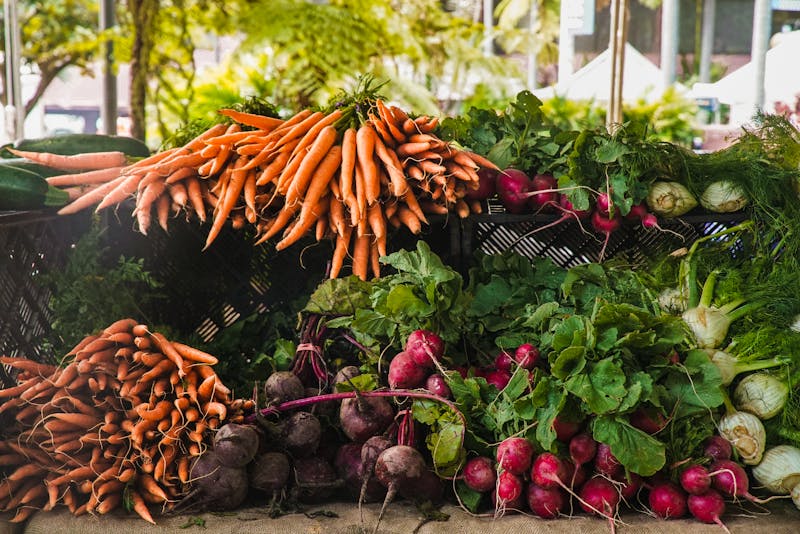
The arrangement
The Three Sisters — maize, beans, and squash — were the central polyculture of Indigenous agriculture across much of the Americas, especially the Eastern Woodlands and the American Southwest. The plants were grown in the same mound or row, each doing work for the others:
- Maize. Tall, grows fast, provides a stalk for beans to climb.
- Beans. Climbing bean varieties use the maize as trellis. Beans fix atmospheric nitrogen into the soil via root nodules with Rhizobium bacteria — the next year's maize benefits.
- Squash. Spreads along the ground; large leaves shade out weeds and conserve soil moisture. Prickly stems discourage pests.
The three together produce more calories per acre than any one of them grown alone. They also produce a more nutritionally complete diet: maize provides starch, beans provide protein and (with maize) complementary amino acids, squash provides vitamin A and fiber.
This was figured out by Indigenous Mesoamerican farmers thousands of years ago and refined across North America. It is one of the most successful agricultural systems ever developed.
What the colonial agronomy lost
European-style row monoculture replaced Three Sisters across most of the eastern United States within two centuries of contact. The monoculture system is mechanically simpler — one crop, one harvest method, one market — and that simplicity is its real selling point.
But it has costs. Monoculture depletes soil nitrogen rapidly (forcing synthetic fertilizer use); requires more water (no understory shade); is more vulnerable to pests (no inter-species discouragement); produces less total food per acre when you account for the full Three Sisters yield versus a single crop.
Contemporary regenerative agriculture is, in many cases, rediscovering pre-colonial polyculture under new vocabulary.
Robin Wall Kimmerer
Robin Wall Kimmerer, in Braiding Sweetgrass (2013), has the central popular-press chapter on the Three Sisters. She is a botanist (SUNY ESF), enrolled member of the Citizen Potawatomi Nation, and a careful writer on Indigenous ecological knowledge. The Three Sisters chapter is the place to start if you've never thought about this.
What this means for a home cook
If you have a garden — even a small one — try a Three Sisters bed. The instructions are simple. Plant maize in a small mound. Two weeks later, plant climbing beans around the maize. Another two weeks, plant squash at the base. Water. Watch.
If you don't have a garden, the kitchen relevance is dietary. Maize, beans, and squash eaten together — say, in a posole, or a succotash, or a stew — were a stable Indigenous calorie base for thousands of years. They still work. A pot of beans, a pan of corn tortillas, a roasted squash. Three colors. Whole protein. Real food.
Reading
- Robin Wall Kimmerer, Braiding Sweetgrass (2013).
- Sean Sherman, The Sioux Chef's Indigenous Kitchen (2017).
- Gary Paul Nabhan, Renewing America's Food Traditions (2008) — covers Three Sisters varieties at risk.
- Devon A. Mihesuah, Recovering Our Ancestors' Gardens (2020) — Native American food sovereignty.
The polyculture
The Three Sisters — corn, beans, and squash grown together — is one
of the most documented Indigenous American agricultural systems.
The plants were cultivated together by Haudenosaunee (Iroquois),
Anishinaabe, Cherokee, and many other Indigenous nations across
eastern North America for at least 2,000 years before European
contact.
The ecological logic is precise: corn provides a vertical
structure for beans to climb; beans fix atmospheric nitrogen into
the soil, which both corn and squash need; squash spreads broad
leaves close to the ground, suppressing weeds and retaining
moisture. The three plants form a mutually supportive system.
The nutritional logic
The Three Sisters together provide a complete protein. Corn alone
is incomplete (low in lysine and tryptophan); beans complete it.
Squash adds vitamin A precursors. The nutritional adequacy of the
Three Sisters diet has been documented in Haudenosaunee and other
Indigenous communities.
The complete-protein argument is sometimes presented as if the
Indigenous farmers were unaware of the underlying nutrition. They
were not. The cultural traditions around the Three Sisters
explicitly framed the three plants as nutritionally
complementary — a sophisticated agronomic understanding that
predates modern nutritional science by millennia.
The performance comparison
Contemporary academic agricultural research has documented that the
Three Sisters polyculture outperforms equivalent monocultures on
several metrics:
- Total calorie yield per acre.
- Protein yield per acre.
- Soil-nitrogen retention.
- Water-use efficiency.
- Pest resistance.
The Land Institute (Salina, KS), Native Seed Search (Tucson, AZ),
and various university agronomy programs have studied the system.
The general finding: the Three Sisters is genuinely superior on
the metrics that matter, by margins that industrial agriculture
should find embarrassing.
The reason industrial agriculture has not adopted polycultures is
not yield. It is mechanization. Monocultures are easier to
harvest with combines; polycultures require hand labor. The
agricultural economy that built around industrial machinery cannot
shift back to polycultures without significant labor restructuring.
The contemporary revival
The Three Sisters is being grown again in increasing numbers of
home gardens, community gardens, and tribal agricultural
operations. The Akwesasne Cooperative (Haudenosaunee), the Native
American Food Sovereignty Alliance, and numerous individual tribal
agricultural programs maintain the practice.
For home gardeners, the planting timing matters. Corn first (it
needs the longest growing season), beans planted at the base when
the corn is 6 inches tall, squash planted between the corn rows
shortly after.
What to cook with the harvest
The Three Sisters together is the traditional preparation: corn
(fresh or dried and ground), beans (dried or fresh), squash
(roasted, cubed, or steamed). The dish is sometimes called Three
Sisters Stew; the form varies by tradition.
Sean Sherman's The Sioux Chef's Indigenous Kitchen (2017)
includes several Three Sisters preparations. Native Seed Search
sells heirloom corn, bean, and squash varieties for home
cultivation.
Further reading
- Robin Wall Kimmerer, Braiding Sweetgrass (2013) — extensive
Three Sisters discussion. - Sean Sherman, The Sioux Chef's Indigenous Kitchen (2017).
- Devon A. Mihesuah & Elizabeth Hoover (eds.), Indigenous Food
Sovereignty in the United States (2019). - Native Seed Search publications.