Tyrosine Turkey Bowl
Turkey is one of the highest dietary sources of tyrosine — the amino acid your brain uses to make dopamine and norepinephrine.
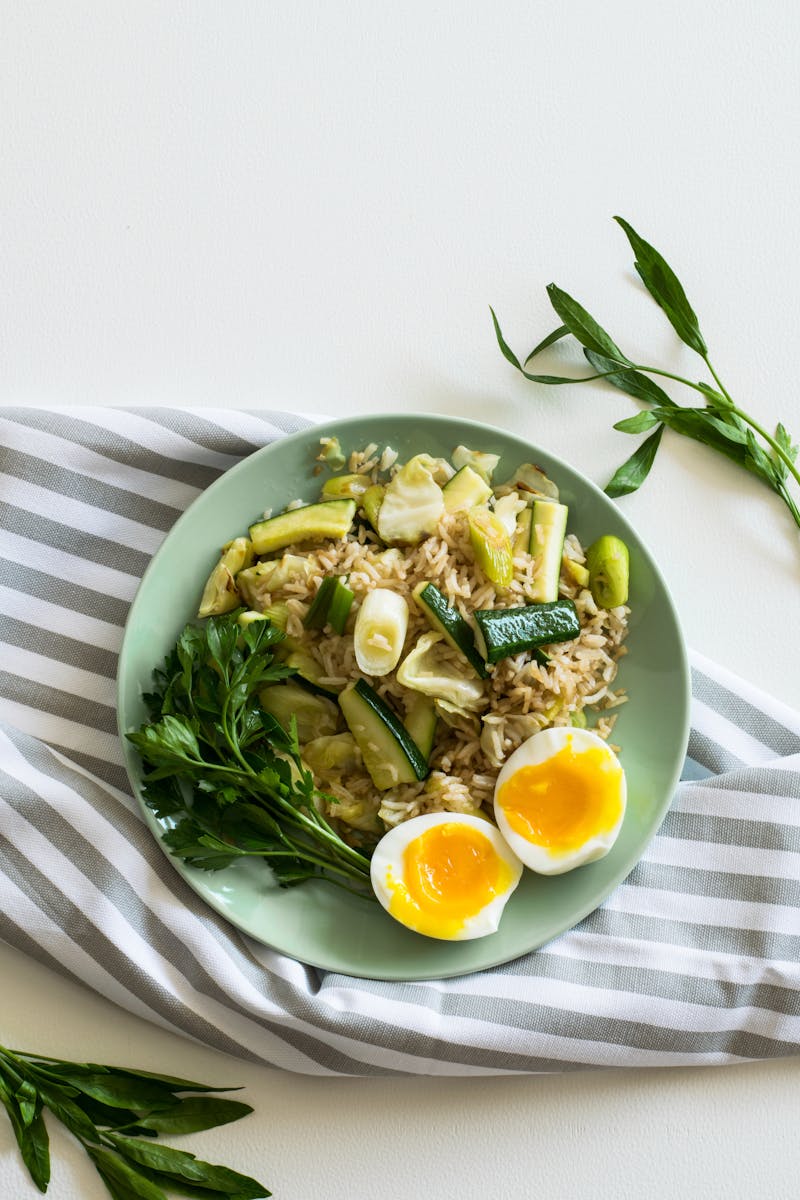
Why this works for founders
Dopamine and norepinephrine drive motivation and sustained attention. Both are synthesized from tyrosine. Turkey has more tyrosine per gram than almost any other whole food. Pair it with complex carbs (quinoa) to help the tyrosine cross the blood-brain barrier, and you get a neurochemically optimized lunch.
Ingredients (1 serving)
- 200g ground turkey or turkey breast, cooked
- ½ cup quinoa (dry — about 1 cup cooked)
- 1 cup baby spinach
- ½ avocado, sliced
- ¼ cup cherry tomatoes, halved
- 1 tbsp olive oil
- Juice of ½ lemon
- Salt, cumin, paprika
Steps
- Cook quinoa: rinse, combine 1:2 with water, bring to boil, simmer 12 min, rest 5 min.
- Season turkey with cumin, paprika, salt. Cook in a pan over medium heat until cooked through, 8–10 min.
- In a bowl: quinoa base, spinach, turkey, avocado, tomatoes.
- Drizzle olive oil and lemon. Season to taste.
Macros per serving (approx)
- Calories: 560
- Protein: 48g
- Fat: 22g
- Carbs: 38g
Founder note
This takes 20 minutes fresh or 5 minutes if turkey and quinoa are prepped. Works cold as a packed lunch.
The deeper neurochemistry
L-tyrosine sits two enzymatic steps upstream of dopamine and three
steps upstream of norepinephrine. The pathway is well characterized:
tyrosine to L-DOPA by tyrosine hydroxylase, L-DOPA to dopamine by
DOPA decarboxylase, dopamine to norepinephrine by dopamine beta-
hydroxylase. The rate-limiting step is tyrosine hydroxylase, and the
enzyme is normally near saturation under normal protein intake — which
means more tyrosine does not directly produce more catecholamines in
healthy, well-fed adults.
Where tyrosine intake does matter is under acute cognitive load.
Several trials including Jongkees et al. (Brain and Cognition, 2015)
have shown that a 100 to 150 mg/kg tyrosine dose ahead of a working-
memory or task-switching challenge improves performance modestly,
with the effect strongest in subjects who were sleep-deprived,
cold-stressed, or under time pressure. The mechanism appears to be
replenishment of tyrosine pools depleted by sustained catecholamine
firing.
Turkey breast carries roughly 750 mg of tyrosine per 100 g serving,
near the top of all whole foods. The 200 g portion in this bowl
delivers roughly 1.5 grams — well below the trial doses, but with the
benefit of arriving alongside the carbohydrate (quinoa) that helps
tyrosine cross the blood-brain barrier. Tryptophan and tyrosine
compete for the same large-neutral-amino-acid transporter; the
carbohydrate component biases the transport ratio toward tyrosine.
Why this is the lunch before the hard afternoon
The constraint on founder afternoon performance is rarely calories.
It is the catecholamine system staying elevated through hours four to
seven of the workday without the cortisol-driven crash that a
high-glucose lunch precipitates.
Eat this bowl 60 to 90 minutes before the highest-cognitive-demand
window of your day. If your hard afternoon block is 2 to 5 pm, eat
this at 12:30 pm. The protein digests through the early afternoon;
the complex carbs keep blood glucose flat; the tyrosine arrives in
the bloodstream around the time the block starts.
Substitutions
- No turkey: chicken breast (similar tyrosine, slightly lower),
cottage cheese (also high tyrosine, vegetarian), edamame plus tofu
combination for a plant version. Pumpkin seeds add roughly 800 mg
tyrosine per cup if you sprinkle them on top. - No quinoa: farro, freekeh, or bulgur. Each is a viable
carbohydrate vehicle for the transporter argument. Avoid white rice
here; the glycemic spike defeats the purpose. - No avocado: olive oil and a handful of pumpkin seeds gives the
same fat profile.
Storage and reheat
The bowl assembled cold holds three days refrigerated. The turkey and
quinoa hold five. If you batch the components and assemble the
morning of, the salad stays crisp longer; if you assemble Sunday
night and refrigerate, the spinach wilts but flavor compounds.
Reheat the turkey and quinoa separately for 60 seconds at 70 percent
power, then build the bowl over the cold greens. The wilted-spinach
version is fine if you prefer it.
Common mistakes
- Cooking the turkey to internal 80 C. It dries out. Pull at 73 C
and rest; carryover takes it to 75. The breast meat is forgiving
enough that 1 to 2 C of overshoot does not destroy the dish, but
the consistent home cook learns to pull early. - Using turkey deli slices. The sodium content (often 800 to 1100 mg
per 100 g) defeats the lunch-before-hard-afternoon argument.
Roast a small breast Sunday; carve through the week. - Pairing this with espresso. The catecholamine arc from caffeine
plus the tyrosine plus the post-meal cortisol can over-stack.
Save the espresso for hour three of the afternoon block, not the
first sip post-lunch.
The bowl is the founder lunch for the days you have to be at full
output between 2 and 5 pm. It is not a daily meal. It is a tool for
the hard afternoons.