Wild Fermentation vs Cultured Starters — Two Approaches, One Bacterium
Some fermentation uses whatever's on the vegetable. Some uses a starter culture you keep alive between batches. The difference is real, and worth knowing.
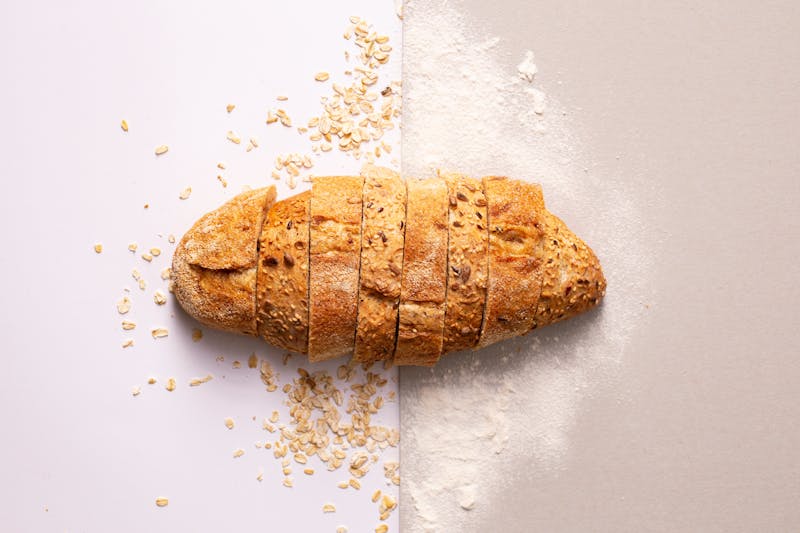
The two methods
Wild fermentation relies on the microorganisms that are already present on the food and in the environment. Most vegetable fermentation (sauerkraut, kimchi, traditional dill brine) works this way. You salt the vegetable, submerge it in brine, and let the Lactobacillus species naturally present on the cabbage or cucumber take over.
Cultured fermentation uses a starter culture — a known organism or community of organisms — added to the substrate. Yogurt, kefir, kombucha, sourdough, beer, wine, miso, tempeh, koji all use cultured starters.
Why the distinction matters
Wild fermentation gives more variability and more regional character. A sauerkraut made in a Bavarian kitchen has a microbial community shaped partly by that kitchen, that cabbage variety, that ambient temperature. The result varies batch to batch.
Cultured fermentation gives reproducibility. Yogurt made with the same starter culture, at the same temperature, for the same time, will be reliably similar every batch. Industrial fermentation is overwhelmingly cultured for this reason.
Wild fermentation is also more forgiving in one way (no starter to keep alive, can't be killed by a dead culture) and more brittle in another (depends on the right organisms being naturally present; harder to do in extremely sterile environments).
How starters are kept alive
A sourdough starter is kept by feeding it flour and water on a regular schedule. The community of wild yeasts and Lactobacillus in the starter eats the new flour, multiplies, and stays viable.
A yogurt starter is kept by taking a spoonful of finished yogurt and using it to inoculate the next batch.
A kombucha SCOBY (Symbiotic Culture Of Bacteria and Yeast) is kept by reserving a portion of the previous batch's liquid plus the cellulose mat that forms on the surface.
A miso koji starter is grown on rice or barley by inoculating with Aspergillus oryzae spores. This is more technical; home miso-making usually starts with purchased koji.
Which to use when
- Vegetables (cabbage, cucumbers, peppers, radishes). Wild fermentation. Salt + brine + time.
- Dairy (yogurt, kefir, sour cream, soft cheese). Cultured. You need an active starter.
- Grains (sourdough, beer, sake). Cultured. Wild yeast can be captured to make a starter, but once captured it functions as a culture.
- Tea (kombucha). Cultured. The SCOBY is the culture.
- Legumes (miso, tempeh, soy sauce). Cultured. Specific molds (Aspergillus oryzae for koji, Rhizopus oligosporus for tempeh).
What to read
- Sandor Katz, Wild Fermentation (2003) and The Art of Fermentation (2012).
- The Noma Guide to Fermentation (Rene Redzepi and David Zilber, 2018) — modern restaurant-grade application.
- Larder: From Pantry to Plate (Tessa Kiros, 2018) and various craft-bread books for sourdough specifically.
A practical first project
Capture a sourdough starter: 50g whole wheat flour + 50g water in a jar, mixed, loosely covered. Daily for a week, discard half and feed with another 50g flour + 50g water. By day 5-7 it should be bubbling reliably. You now have a starter you can keep for years.
Two methodological camps
Fermentation falls into two broad methodological approaches:
-
Wild fermentation. Relying on the ambient microbes —
bacteria and yeasts already present on the food's surface
and in the kitchen environment. Traditional sauerkraut,
sourdough, kombucha, kimchi, wine, and many cheese-making
processes work this way. The fermentation begins
spontaneously when the substrate is in the right environment
(right salt level, right temperature, right humidity). -
Cultured starters. Adding a known, isolated microbial
culture to control the fermentation. Industrial yogurt
uses specific Lactobacillus strains. Industrial bread
uses Saccharomyces cerevisiae baker's yeast. Industrial
pickling sometimes uses inoculated cultures. The advantage
is predictability; the disadvantage is reduced microbial
diversity in the finished product.
The diversity argument
Wild fermentation produces a more diverse microbial community
in the final product than cultured fermentation. A wild
sauerkraut contains dozens to hundreds of lactic acid bacteria
species; a cultured pickled cabbage with a specific inoculated
strain contains far fewer.
The diversity matters for two reasons:
- Flavor complexity. More diverse microbial communities
produce more complex flavor profiles. - Gut microbiome contribution. The Sonnenburg lab work at
Stanford suggests that fermented foods contribute to gut
microbial diversity primarily through their diverse microbial
communities, not through the specific bacteria they contain
(which mostly do not colonize the gut directly).
The reliability trade-off
Cultured starters are more reliable. A wild sauerkraut
ferment can occasionally fail (the wrong bacteria establish
dominance; the result is unpleasant or unsafe). A cultured
yogurt or sourdough with a maintained starter is consistent.
The industrial food industry uses cultured starters almost
exclusively because the reliability is essential at scale.
Home fermenters have more flexibility — a failed batch is a
small loss; the variability is part of the practice.
Where each makes sense
- Wild fermentation. Vegetables (sauerkraut, kimchi,
pickles), sourdough bread, kombucha, fruit wines, vinegars. - Cultured starters. Yogurt, kefir, cheese (most varieties),
beer, the more reliable wine production.
The choice often depends on the technique difficulty and the
consequence of failure. A failed yogurt is wasted milk; a
failed kombucha is wasted tea. The cost of failure shapes the
method.
The starter as a relationship
The cultured-starter approach has its own deep tradition. A
maintained sourdough starter is a living culture that can be
kept for generations; some bakeries claim continuous starters
going back over a century. The starter is not merely an
ingredient but a relationship between the baker and a specific
microbial community.
The same is true for cheese-making cultures, kefir grains
(which can be passed between households and maintained
indefinitely), and yogurt starters. The relationship-with-a-
culture is one of the more interesting features of cultured
fermentation as a practice.
Further reading
- Sandor Katz, Wild Fermentation (2003) and The Art of
Fermentation (2012). - Robert Hutkins, Microbiology and Technology of Fermented
Foods (2018). - Kirsten Shockey and Christopher Shockey, Fermented
Vegetables (2014).